
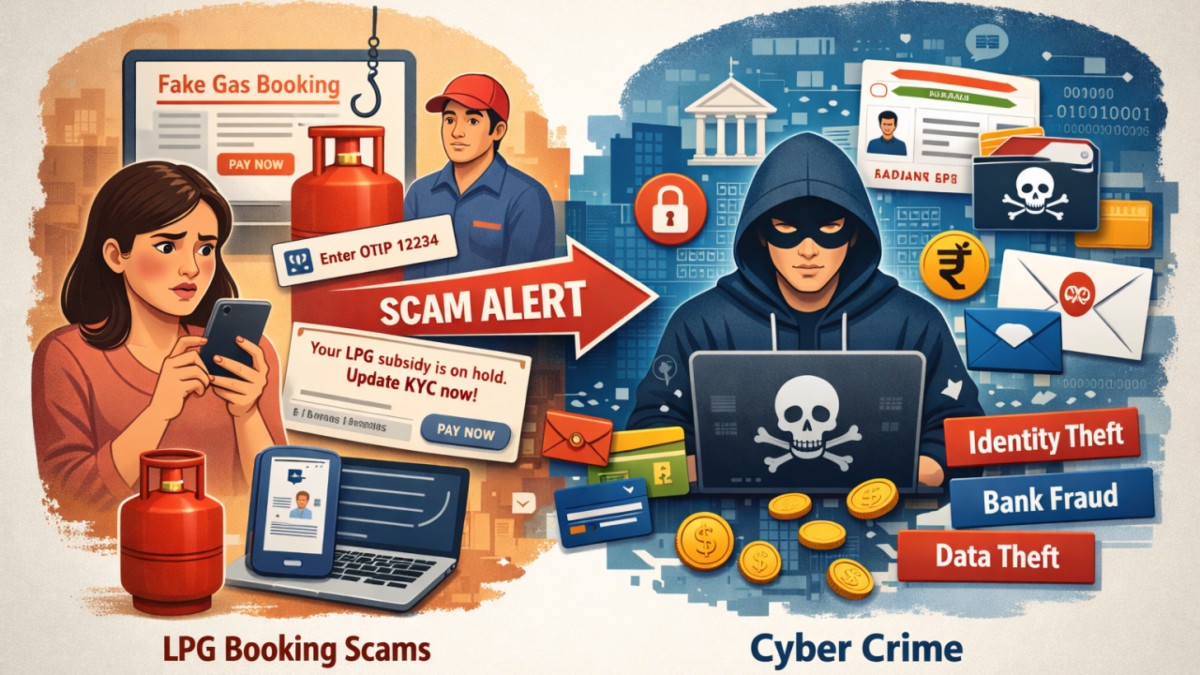
LPG Gas Cylinder Subsidy Scam:
As per PSB's X handler, scammers or fraudsters are using fake electricity, water, and LPG subsidy offers designed to steal your personal and banking details.
The bank said, "Never click on unverified links, share OTPs or Aadhaar details, or pay fees to claim subsidies. Always verify offers through official channels."
- Benchmark Quote #1:Reported trading price point of rs, across delivery networks.
- Benchmark Quote #2:Reported trading price point of Rs 200 across delivery networks.
- Benchmark Quote #3:Reported trading price point of Rs 300 across delivery networks.
- Benchmark Quote #4:Reported trading price point of Rs 942 across delivery networks.
Here are some of the scammers methods to be alert about:
1. Some fraud messages will be threatening and filled with urgent deadlines. These fraudsters send scamming messages asking customers to make certain payments with fabricated deadlines. The fraud messages go as far as threatening to stop electricity, water, or LPG services unless you act immediately.
2. Fraud messages can also appear on your WhatsApp or SMS through unverified or unknown numbers, asking you to link your LPG subsidy.
3. These fraud messages can ask for bank OTPs, UPI PINs, or card details.
4. Sometimes, the messages include payment of certain registration or verification fees for releasing LPG subsidy.
5. Also, beware of scammers who give you fake contact numbers for assistance in your LPG-related services. This method can be used to tap your contact list or tap your phone overall for personal details.
LPG Gas Cylinder Fraud: What Should You Do?
As per Punjab Sind Bank, following tips are useful in protecting your LPG subsidy:
1. Never click on unverified links.
2. Never share OTPs or banking credentials to unverified sources or messages.
3. Never install remote-access apps at a stranger's request.
4. Never share Aadhaar biometrics with unauthorised persons.
5. Never pay registration or verification fees to claim a subsidy.
6. Never trust unsolicited or unverified subsidy messages or calls.
⚠️ The Bait Is Subsidies. The Catch Is Aadhaar Fraud!Beware of fake electricity, water and LPG subsidy offers designed to steal your personal and banking details. Never click on unverified links, share OTPs or Aadhaar details, or pay fees to claim subsidies. Always verify offers through official channels.Stay alert. Stay cyber safe! 🔐#AadhaarFraud #SubsidyScam #CyberSecurityAwareness #FraudPrevention #DigitalSafety #PunjabAndSindBank #BePSBSmart #WhereServiceIsAWayOfLife
In July, ICICI Bank also issued a campaign warning customers of scammers related to LPG services. The bank's website said, "This is the LPG scam - one of the fastest-growing frauds in India.
As per ICICI Bank, with news of global conflicts impacting fuel supply chains, concerns about LPG and PNG shortages have increased. Fraudsters are exploiting the situation by impersonating gas agencies, oil companies or government officials to deceive people.
The fraudsters are targeting bank accounts through fake booking links and urgent KYC update calls, often using messaging apps to reach out to potential victims, as per the bank.
Here's how the LPG scam works:
As per the private bank, scammers create panic about service disconnection or price hikes, enticing victims to click phishing links, install malicious APK files or share OTPs, resulting in unauthorised bank transfers and stolen credentials. Some of the methods include:
1. Contact you claiming that your LPG subsidy/connection has been blocked or stopped.
2. Insist on urgent KYC updates to prevent disconnection of the gas service.
3. Share fake links for subsidy verification or LPG booking.
4. Request confidential details such as OTP, Debit Card/Credit Card information or UPI approvals.
Here are some of the tips to remain safe, as per ICICI Bank:
1. Do not click on links about gas payment / disconnection or KYC links received via messaging apps from unknown senders. Always verify the source.
2. Never download apps or APK files sent through messages or calls.
3. Do not share OTPs, PINs, Card details or passwords with anyone.
4. Always verify requests through your authorised LPG distributor.
5. Use only official websites or apps of oil and gas companies for making bookings and to get updates.
6. Verify gas bills or KYC requests only through official websites, apps or Customer Care numbers.
If you are a victim of online fraud, reach out to the National Cyber Crime portal at cybercrime.gov.in, or call the helpline on 1930. You can also file a complaint at your local LPG distributor, banks, or Indian Oil, HPCL, and BPCL websites or mobile apps.
Indane Gas is produced by Indian Oil, while HP Gas and Bharat Gas cooking cylinders are manufactured by HPCL and BPCL.
With effect from October 1, 2026, the Oil Ministry made mandatory completion of biometric Aadhaar authentication to avail the benefits offered under the PMUY scheme, which eventually also applies to LPG subsidy.
By being a PMUY account beneficiary, LPG users get subsidy of Rs 200 to Rs 300 on their domestic LPG cylinders. These subsidies are offered on four LPG refills per year. The subsidy reduces the prices of 14.2 Kg LPG cylinders which are purchased at retail price.
For instance, 14.2 Kg per LPG cylinder has a retail price of Rs 942 in Delhi. If you are a PMUY beneficiary, the subsidy of Rs 200 will reduce the purchase cost to Rs 742. If Rs 300 subsidy is applied then the cost declines to Rs 642 per cylinder.
The subsidy is directly transferred to the beneficiaries bank account linked to their PMUY account, and only after purchasing the LPG cylinder at retail price. So you basically get a refund of Rs 200-300.
However, if you have not completed your e-KYC, then you will not be eligible for these subsidies. The Oil Ministry has directed oil marketing companies like Indian Oil, BPCL, and HPCL to halt LPG subsidy benefits of customers who have not completed their biometric authentication (BAA) immediately until they complete the e-KYC process.
Todaybhav Ground Market Intelligence & Buyer Advisory
Todaybhav's proprietary commodity monitoring across 110 Indian cities and 50+ APMC mandis indicates that current price levels reflect shifting spot demand and import tariff dynamics. Retail buyers are advised to verify 6-digit BIS HUID hallmarking and inspect local jeweller making charges (typically 8% to 18%) to ensure accurate invoice valuation.
For live updates, comparative city rate spreadsheets, and historical 10-day price trends, visit Todaybhav.in's interactive commodity dashboard.
- Purity Verification:Always insist on 6-digit alphanumeric HUID hallmark verification via the official BIS Care app.
- Invoice Calculation:Statutory 3% GST applies to the combined sum of raw metal cost and jeweller making charges.